
Can a Pacifier Really Cause a Speech Delay?
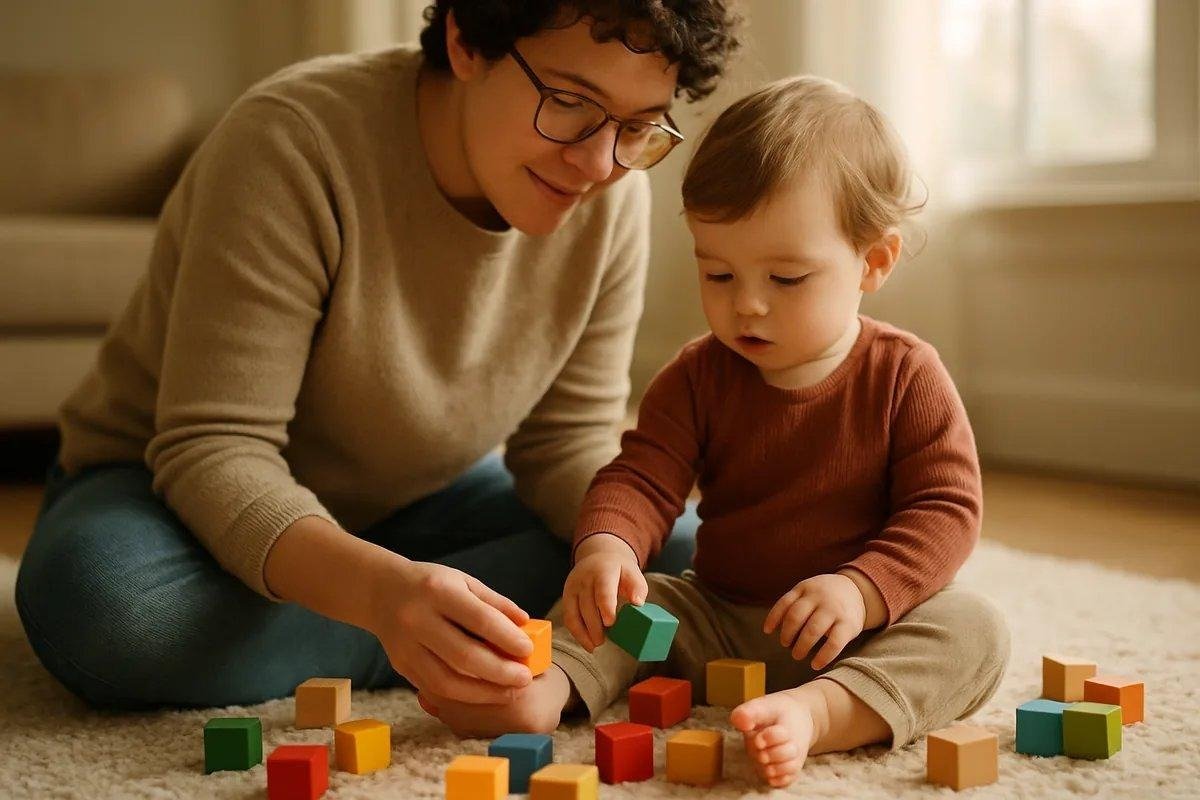
A pacifier does not directly cause a speech delay. The concern is about heavy, all-day use over many years, which can cut into the time a child spends babbling and practicing sounds. Occasional soothing is not the issue. Prolonged, constant use is the pattern worth reducing.
It is one of the most common worries passed around at playgroups and family dinners: that the pacifier a toddler loves might be holding back their talking. The question sounds simple, but the answer has some nuance. So do pacifiers cause speech delays? Not in the direct, one-to-one way the rumor suggests. What matters is how much a child uses one, for how long, and what else is going on with their language.
Where does the pacifier worry come from?
The idea has a reasonable root. A child learns to talk partly through practice: babbling, cooing, imitating faces, and experimenting with sounds. A pacifier sits in the mouth and, when it is in, the child is far less likely to be making those sounds. If a pacifier is in for most of the waking day, month after month, that is a lot of missed practice time. The concern is less about the object itself and more about what the object replaces.
There is also a mechanical angle. The mouth, tongue, and jaw shape themselves partly through use during early childhood. Very heavy, long-term pacifier habits can influence tongue resting position and the way the front teeth line up, which some clinicians link to certain sound patterns. Again, the key word is prolonged.
What does the research actually say?
The honest summary is that the evidence is mixed and not strong enough to say a pacifier causes delays on its own. Some studies have found associations between long pacifier use and speech difficulties, but association is not proof of cause, and other factors often travel alongside heavy pacifier use. Major child-health bodies do not list pacifiers as a leading cause of speech delay. The National Institute on Deafness and Other Communication Disorders describes speech and language development as shaped by hearing, brain development, and everyday interaction far more than by any single object in a child’s routine.
What most sources do agree on is timing. Occasional pacifier use in the first year, especially for sleep and comfort, is generally considered fine. The caution grows when a child is still relying on a pacifier heavily well into the toddler years, when talking should be taking off.
How much pacifier use is too much?
There is no single number, but a useful test is whether the pacifier is limiting talking. A pacifier that comes out for meals, play, and conversation, and mostly shows up at sleep time, is unlikely to be a problem. A pacifier that is in the mouth during play, story time, and social moments is a different story, because those are exactly the moments a child would otherwise be practicing words.
Many pediatric sources suggest beginning to phase the pacifier out during the second year, aiming to be done by somewhere around age two to three. That range balances a child’s need for comfort against the value of freeing the mouth for talking and protecting dental development.
How can I tell a real speech delay from a pacifier habit?
This is where milestones help more than guesswork. The Centers for Disease Control and Prevention publishes age-based checklists parents can use to see whether a child is roughly on track. In broad terms, many children say a first word around 12 months and combine two words by age two. The American Speech-Language-Hearing Association also describes how late language emergence looks in toddlers who are slow to start talking despite otherwise typical development.
If a child is well behind these ranges, the pacifier is unlikely to be the whole explanation. A true delay can involve hearing, oral-motor skills, or broader development, none of which a pacifier explains by itself. That is why removing the pacifier and seeing no change is a signal to look further rather than to keep waiting.
What should parents do about it?
A calm, practical plan works better than panic. Reduce pacifier time so the mouth is free during waking, talking, and playing hours. Fill those freed-up moments with back-and-forth talk: name what you see, pause to let the child respond, and build on whatever sounds or words they offer. This everyday interaction is the real engine of language, with or without a pacifier in the picture.
If a delay is a genuine concern, an evaluation from a speech-language pathologist is the reliable next step, and parents can request one directly. Between that evaluation and any therapy that follows, families often want something to do at home. Short daily play-based practice can help fill the gap, and options such as this voice-first speech app give a child low-pressure speaking practice through play, which can complement a clinician’s work. Home practice like this is a supplement to therapy rather than a substitute, and it works best kept light and encouraging rather than turned into a chore.
See also: How Prior Authorization Works for CVS Caremark Wegovy Coverage
Does taking the pacifier away fix everything?
Not always, and it is worth setting expectations. Reducing pacifier use gives a child more chances to talk and can genuinely help, especially if the pacifier had been in most of the day. But if a real delay is present, it usually has other roots, so improvements may be modest until the underlying cause is addressed. The American Academy of Pediatrics encourages families to track development over time and to act early when something seems off, rather than assuming a single habit is the sole culprit.
Key takeaways
- Pacifiers do not directly cause speech delays. Heavy, all-day, long-term use is the pattern to watch, because it cuts into practice time.
- Occasional and sleep-time use in infancy is generally not a concern.
- Many sources suggest weaning off the pacifier during the second year, roughly by age two to three.
- Milestones, not the pacifier, are the best guide to whether a true delay exists.
- Removing the pacifier helps free the mouth for talking, but a lasting concern deserves an evaluation.
Frequently asked questions
Do pacifiers cause speech delays?
There is no strong evidence that a pacifier directly causes a delay. Heavy, all-day use over many years is the pattern researchers question, because it reduces chances to babble and practice sounds.
At what age should a child stop using a pacifier?
Many pediatric sources suggest weaning during the second year, often by around age two to three, to protect both speech practice and dental development.
Can a pacifier affect how my child pronounces sounds?
Long-term heavy use can affect tongue position and the shape of the mouth over time, which may influence some sounds. This relates to prolonged use, not occasional soothing.
How can I tell if my child has a real speech delay?
Watch milestones such as first words around 12 months and short phrases by age two. If a child is well behind, an evaluation from a speech-language pathologist is the reliable next step.
Will taking the pacifier away fix a speech delay?
Reducing pacifier time frees the mouth for talking, which helps. But a genuine delay usually has other causes, so an evaluation matters if concerns continue after the pacifier is gone.
Sources
- American Speech-Language-Hearing Association: Late Language Emergence (asha.org)
- American Speech-Language-Hearing Association: Speech and Language Developmental Milestones (asha.org)
- Centers for Disease Control and Prevention: Developmental Milestones (cdc.gov)
- National Institute on Deafness and Other Communication Disorders: Speech and Language (nidcd.nih.gov)
- American Academy of Pediatrics (HealthyChildren.org): Toddler Development (healthychildren.org)